

If you've spent any time trying to find the best proposal automation tool for government contractors, you know the options are overwhelming — and most of them weren't built with federal work in mind. Small-to-mid GovCon firms (think under 500 employees) are stuck in an awkward spot: you need the kind of compliance rigor and Shipley-aligned process that big primes rely on, but you don't have a 20-person proposal shop or a six-figure software budget. We've been in that world for years, so we put together this guide ranking the 10 best proposal automation tools for small-mid government contractors based on what actually matters — AI capabilities, GovCon-specific features, SAM.gov and GovWin IQ integrations, Shipley process support, and total cost of ownership. Our take: Proposal Connect is the strongest choice for small-to-mid government contractors in 2026 because it was designed for exactly this use case — AI-powered proposal writing, gate review automation, and native federal integrations, all without the enterprise price tag.
Which Government Proposal Platform Has the Strongest Feature Set for Mid-Market Contractors?
For mid-market government contractors — roughly $10M to $100M in revenue, or 50 to 500 employees — Proposal Connect has the strongest feature set. It is the only platform in this comparison that covers all five capabilities mid-market teams actually need in one product: AI proposal writing, automated compliance matrix generation, Shipley-aligned gate reviews, native SAM.gov import, and GovWin IQ integration. Every other platform here covers at most two of the five.
Broadest feature set
Proposal Connect
All five mid-market capabilities in one workspace, priced for teams without a dedicated proposal shop.
Deepest at one thing
VisibleThread
Strongest compliance and readability analysis, but not a drafting or pipeline platform on its own.
Best pipeline intelligence
GovWin IQ
Unmatched market and opportunity data, but it stops where proposal production begins.
The full feature matrix for all ten platforms is in the side-by-side comparison below, and the capabilities themselves are unpacked in what mid-market GovCon firms actually need.
Key Takeaways
- 1 Proposal Connect is our top pick for small-mid GovCon. It's one of the few platforms that bundles AI proposal writing, Shipley gate reviews, SAM.gov opportunity import, and GovWin IQ integration at an SMB-friendly price.
- 2 Responsive (RFPIO) leads the enterprise RFP space. If you have the budget ($7K-$28K/year) and need to handle commercial + government RFPs at high volume, it's a solid pick — but it lacks GovCon-specific workflows.
- 3 GovWin IQ is indispensable for pipeline intelligence, but it's not a proposal tool. Pair it with something like Proposal Connect for the full capture-to-submission workflow.
The bottom line: Most tools on this list started as commercial RFP platforms and bolted on government features later. Proposal Connect was purpose-built for federal contracting — and when your entire business depends on compliance, Shipley process, and federal integrations, that distinction matters more than most vendors want to admit.
How We Evaluated These Tools
We looked at each tool through the lens of a small-mid GovCon BD team — not an enterprise procurement office with unlimited budget. Our evaluation draws from public product documentation, verified reviews on G2 and Capterra, and hands-on experience where available.
Can it actually draft proposal sections, or is it just glorified search? We looked for generative writing, compliance auto-checks, and intelligent content reuse.
Does it understand the Shipley BD lifecycle? Gate reviews, Go/No-Go frameworks, color teams, compliance matrices — or are those afterthoughts?
What does it actually cost for a team of 5-20 people? We penalized tools that hide pricing behind sales calls with no public transparency.
How fast can a small team get productive? If onboarding takes 3 months and a dedicated admin, that's a dealbreaker for most GovCon shops.
Does it talk to SAM.gov, GovWin IQ, SharePoint, and your CRM? Manual data re-entry kills small teams faster than anything.
Compliance matrix automation, Section L/M requirement traceability, and FAR/DFARS awareness. The basics that separate GovCon tools from generic ones.
What Small and Mid-Market GovCon Firms Actually Need
Before we get into the rankings, it's worth spelling out why most "proposal tools" fall short for government contractors. The challenges are specific and, frankly, most product teams building SaaS for the commercial world don't think about them.
- Tight budgets with high stakes — Enterprise tools like Qvidian, Responsive, or GovWin IQ can run anywhere from $7K to well over $100K annually. For a firm doing $20M in revenue, that's a serious line item. You need real GovCon features at a price that doesn't eat your margin.
- Everyone wears three hats — Your capture manager is probably also writing proposal sections, reviewing compliance, and managing the volume leads. Tools have to reduce work, not create new workflows to manage.
- Volume matters — The difference between submitting 5 and 15 proposals per quarter is often the difference between survival and growth. AI-assisted first drafts aren't a nice-to-have anymore — they're how you keep up.
- Federal compliance is non-negotiable — Section L/M parsing, compliance matrices, FAR/DFARS awareness, set-aside tracking. Try doing that in Proposify or PandaDoc. It doesn't work.
- Process discipline wins contracts — Most winning GovCon firms run some version of the Shipley BD lifecycle. Your proposal tool should reinforce that process with built-in gate reviews, not fight against it.
 PC
PC
Best for: Small-mid GovCon firms that want AI-powered proposal automation with Shipley workflows and native federal integrations.
We built Proposal Connect because nothing else on the market hit the right intersection of AI capability, Shipley process support, and federal integrations at a price small contractors could justify. The platform uses AI agents (built on LangGraph) that don't just autocomplete — they analyze RFPs section by section, check compliance against requirements, and draft proposal content within the context of your past wins. Native integrations with SAM.gov pull opportunities directly into your pipeline, and GovWin IQ data enriches your capture planning without manual lookups.
Pros
- AI agents that analyze, draft, and check compliance — not just search
- Shipley gate reviews (Gate 0-4) and Go/No-Go automation built in
- Native SAM.gov import and GovWin IQ integration
- Real-time collaborative editing (multiple writers, same section, no conflicts)
Cons
- Newer to market — smaller user community than legacy players
- GovCon-focused by design — not the right fit for purely commercial shops
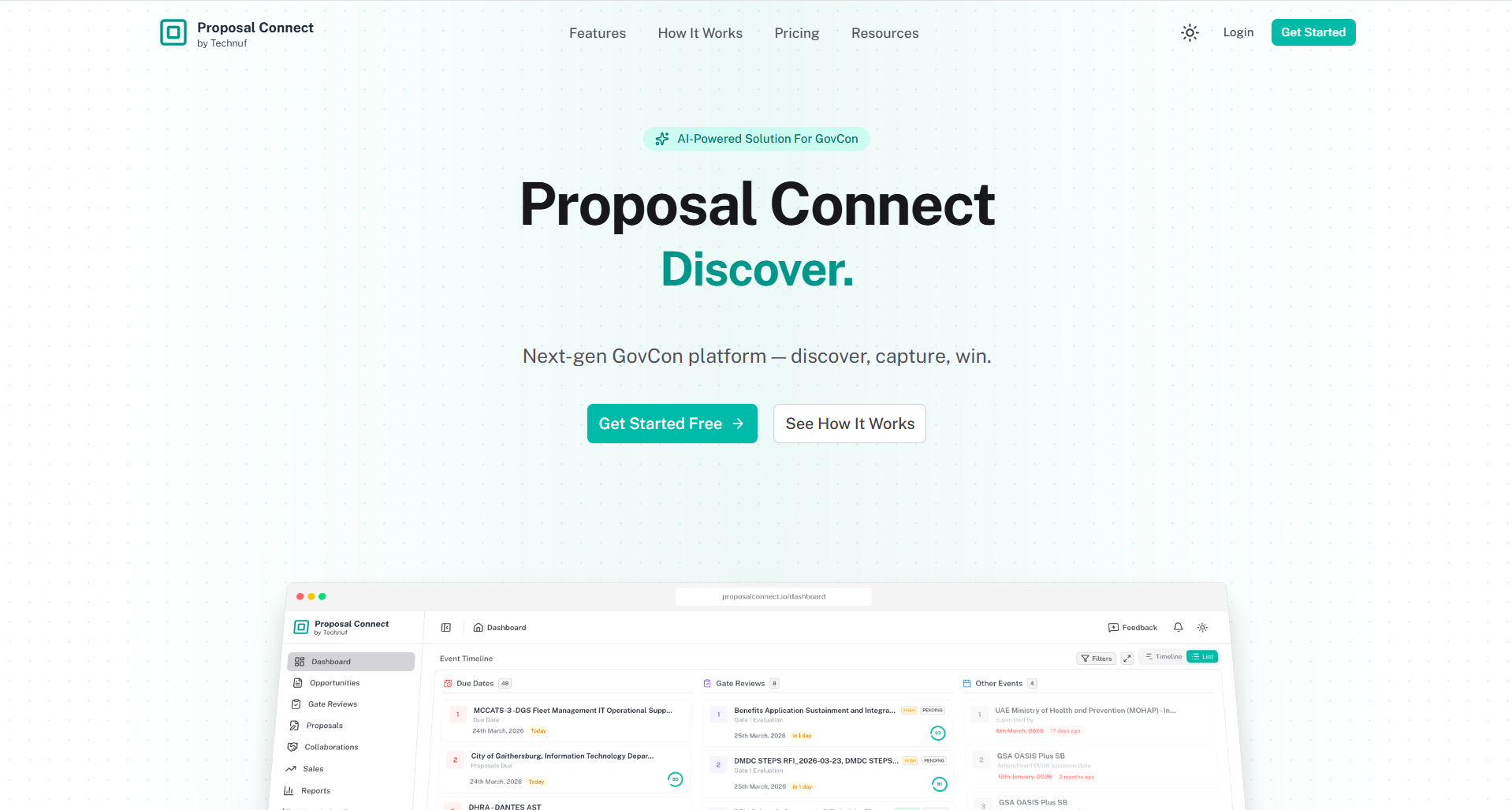
Our take: This is the tool we built because nothing else existed for the small-mid GovCon space. We're biased (see disclosure at the bottom), but the feature set speaks for itself — no other platform at this price point combines Shipley gate reviews, AI agents, and native federal integrations.
 R
R
Best for: Large organizations managing hundreds of RFP responses annually across government and commercial sectors.
Responsive (rebranded from RFPIO in 2023) is widely considered the market leader in enterprise RFP response management. Their content library and AI-powered answer recommendations are genuinely best-in-class — if you're answering the same types of questions across hundreds of RFPs, Responsive shines. They offer four tiers (Lite through Enterprise) with strong CRM integrations. The catch for GovCon teams: there's no Shipley workflow support, no compliance matrix, and no SAM.gov or GovWin integration. It's a commercial tool that some government teams happen to use.
Pros
- Best-in-class content library with AI answer recommendations
- Strong Salesforce, MS Dynamics, Slack, and Teams integrations
- Mature platform with a large user base and proven track record
Cons
- Estimated $7K-$28K/year — tough for small GovCon budgets
- No Shipley gate reviews, compliance matrices, or GovCon-specific features
- No SAM.gov or GovWin IQ integration
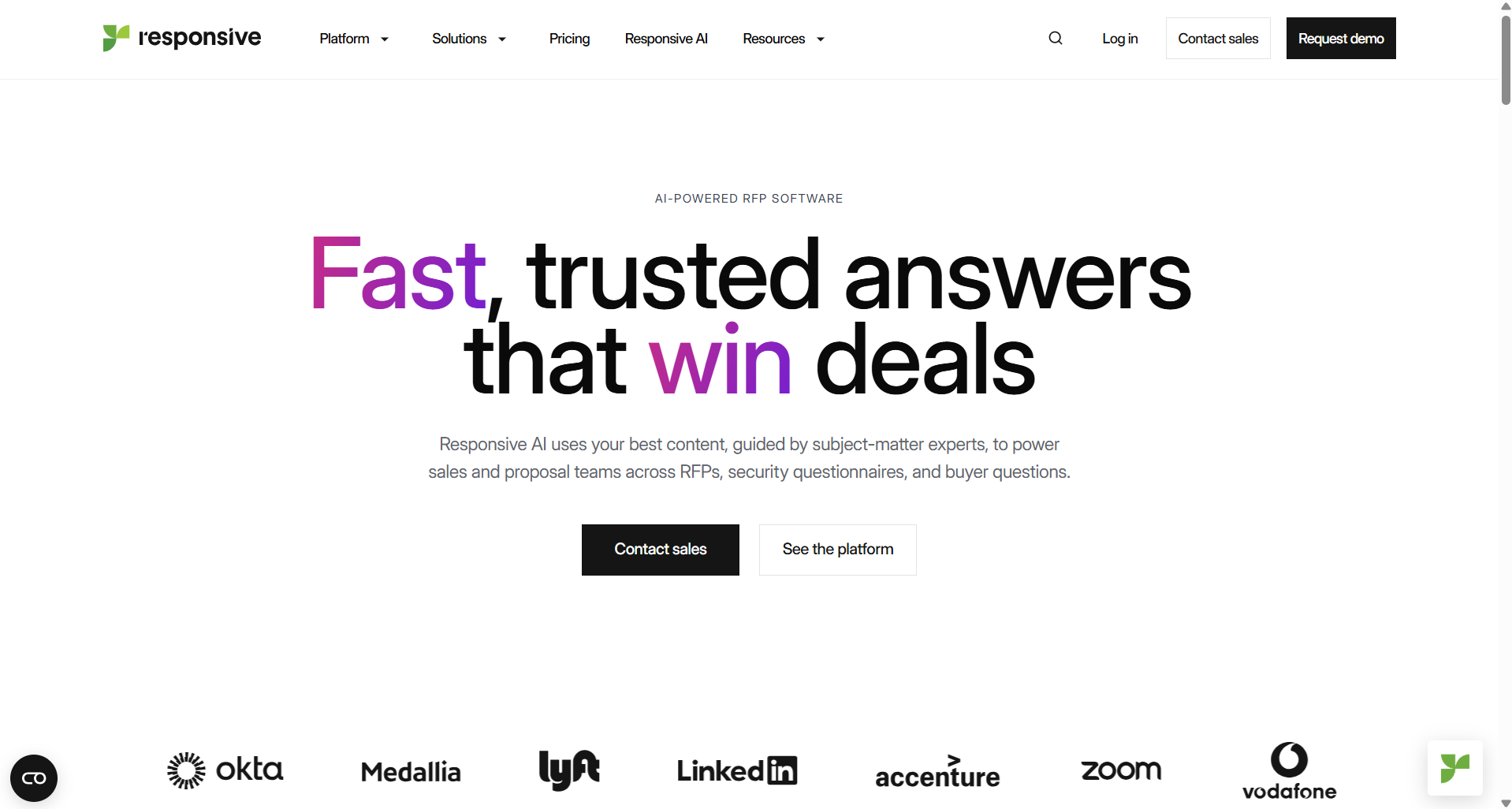
Our take: If your firm manages 500+ RFPs a year across both commercial and government, Responsive is worth the investment. For a small GovCon team running 30-50 federal proposals, you're paying enterprise prices for features you don't need while missing the ones you do.
 L
L
Best for: Mid-market teams that answer similar RFP questions repeatedly and need strong content reuse.
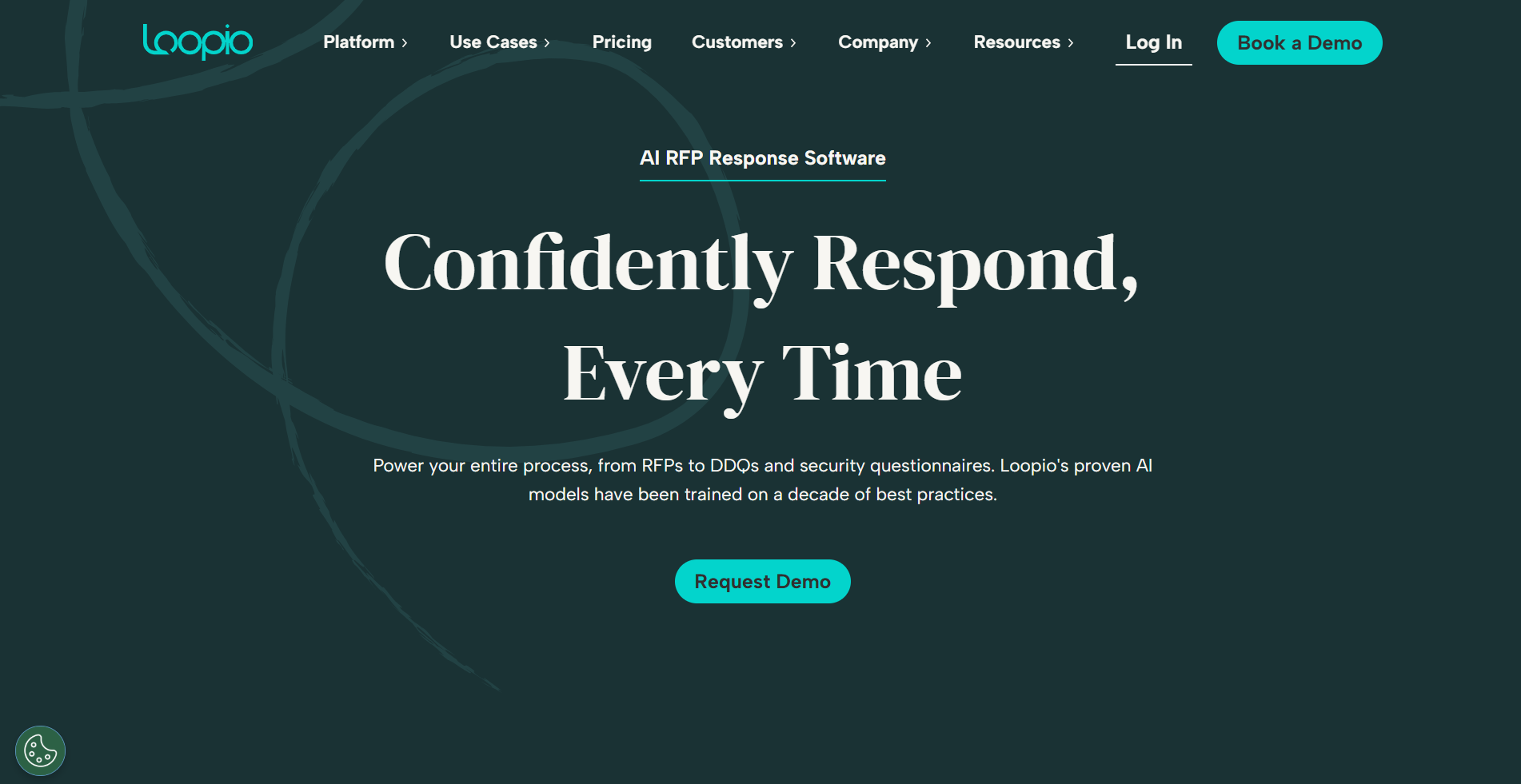
Loopio has carved out a strong niche in content library management. Their "Magic" AI feature auto-fills answers from your existing library, which is genuinely useful if your proposals involve a lot of recurring questions. Over 800 organizations use it, including names like IBM and FedEx. The issue for GovCon teams: Loopio treats proposal response as a content retrieval problem, not a capture management problem. There's no gate review, no compliance matrix, and no federal integrations. It's a great content engine — but you'll need other tools around it.
Pros
- Excellent content library with automatic freshness reminders
- "Loopio Magic" AI auto-fills and refines answers from past content
- Clean UI, good collaboration features, solid CRM integrations
Cons
- No capture management, gate reviews, or Shipley workflow support
- No GovCon-specific compliance features
- Starts around $20K/year for 10 seats — not cheap for what you get
Our take: Loopio is genuinely great at what it does — content reuse and questionnaire management. But it solves about 30% of the GovCon proposal problem. You'll still need separate tools for capture, compliance, and federal integrations.
 Q
Q
Qvidian by Upland Software
Best for: Large enterprises with dedicated proposal ops teams who live in the Microsoft Office ecosystem.
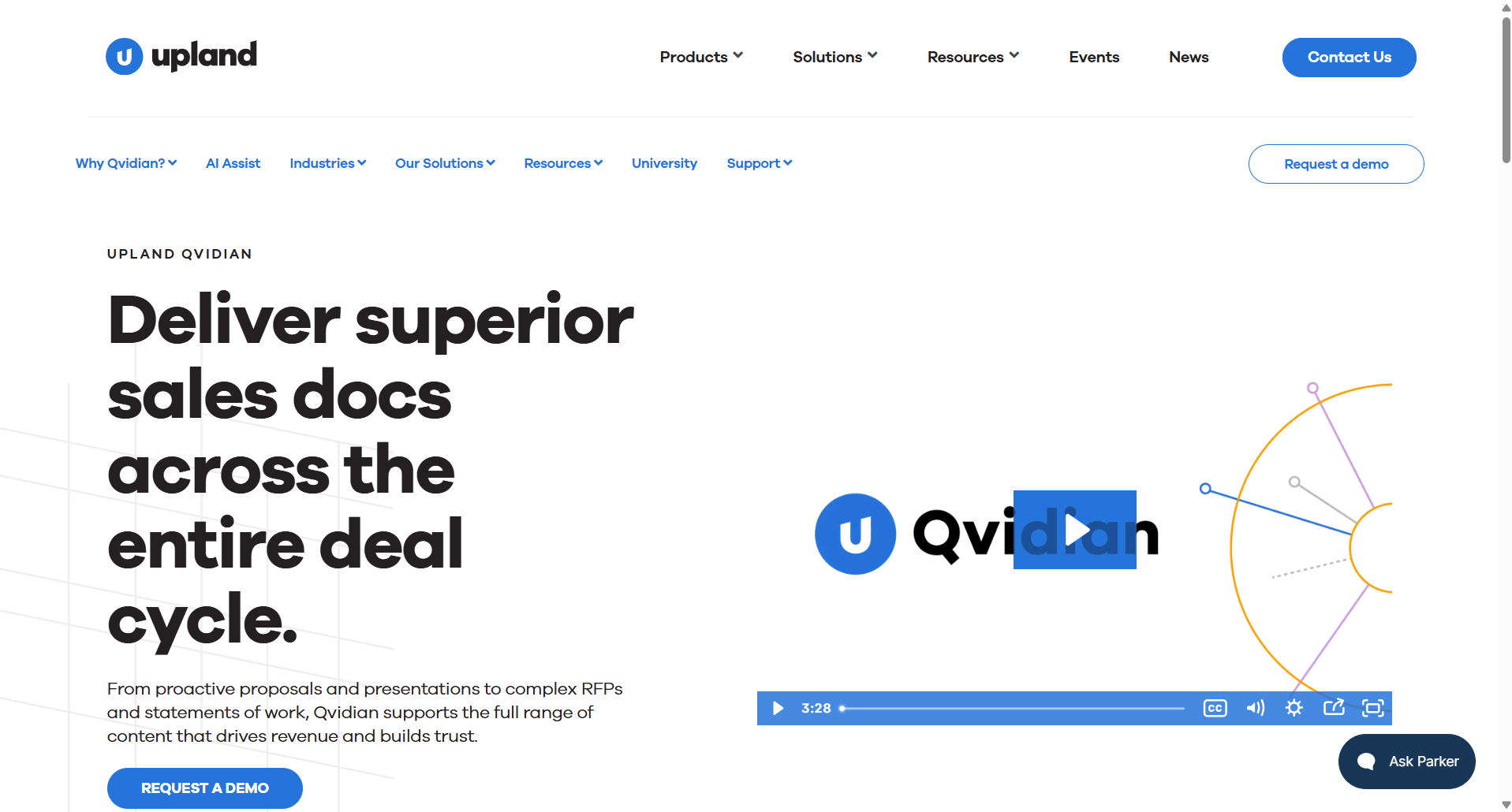
Qvidian has been around for a long time and has deep roots in the proposal automation space. Now part of Upland Software's portfolio, it claims over 200,000 users and has particularly strong adoption in banking and financial services. The platform is document-centric — it generates proposals from Word, Excel, and PowerPoint templates with content pulled from a central library. Qvidian recently added "AI Assist" for generative content creation. The challenge: the UI feels dated, onboarding is heavy, and pricing requires a sales conversation. For small GovCon firms, it's a lot of tool for features you may not need.
Pros
- Deep Microsoft Office integration (Word, Excel, PowerPoint, SharePoint)
- Native Salesforce integration at no extra cost
- New AI Assist feature for generative content
Cons
- Dated interface with a steep learning curve
- No Shipley gate reviews or GovCon-specific compliance tools
- Enterprise pricing — not transparent, requires sales engagement
Our take: If you're already embedded in the Upland ecosystem and have a large proposal ops team, Qvidian is functional. For a 10-person GovCon firm? You'll spend more time configuring it than writing proposals.
 VT
VT
Best for: GovCon teams that need automated compliance checking and proposal readability scoring.
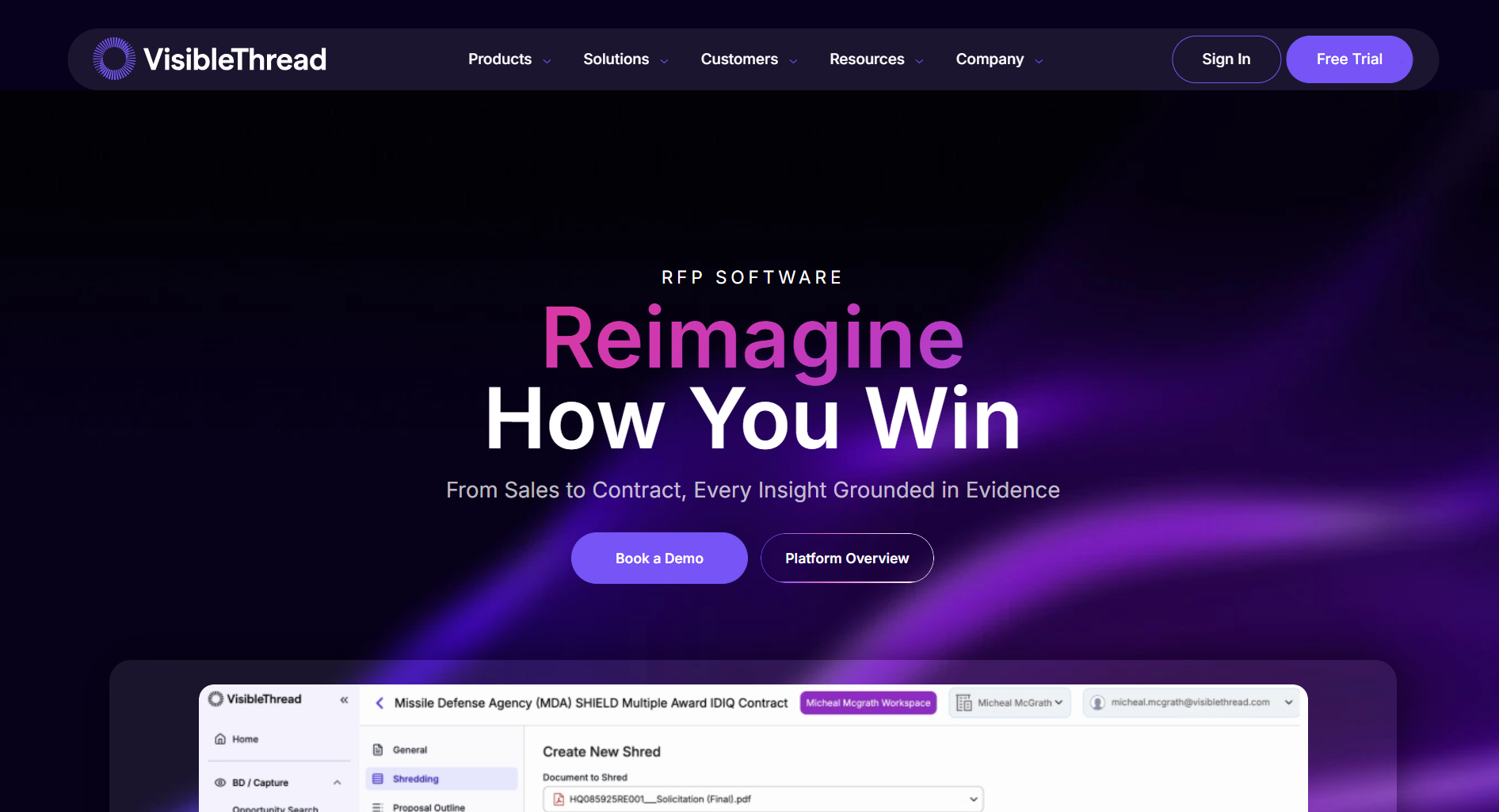
VisibleThread occupies an interesting niche — it's primarily a compliance and readability analysis tool rather than a full proposal platform. It's popular with government contractors who need to verify their proposals against RFP requirements before submission. The tool scans documents for compliance gaps, readability issues, and acronym consistency. Several large defense primes use it as part of their review workflow. It's not a replacement for a proposal management platform, but it's a useful complement if compliance verification is your biggest pain point.
Pros
- Strong compliance checking against RFP requirements
- Readability scoring and plain language analysis
- Used by government contractors — understands the federal space
Cons
- Not a full proposal management platform — analysis only
- No AI writing, content library, or collaboration features
- Needs to be paired with other tools for the full workflow
Our take: VisibleThread is a solid compliance verification tool that complements a full proposal platform. It won't replace your proposal workflow, but it can catch compliance gaps that human reviewers miss — especially useful during final Pink or Red Team reviews.
 E
E
Best for: Teams that refuse to leave Microsoft Word and need proposal content assembly without learning a new platform.
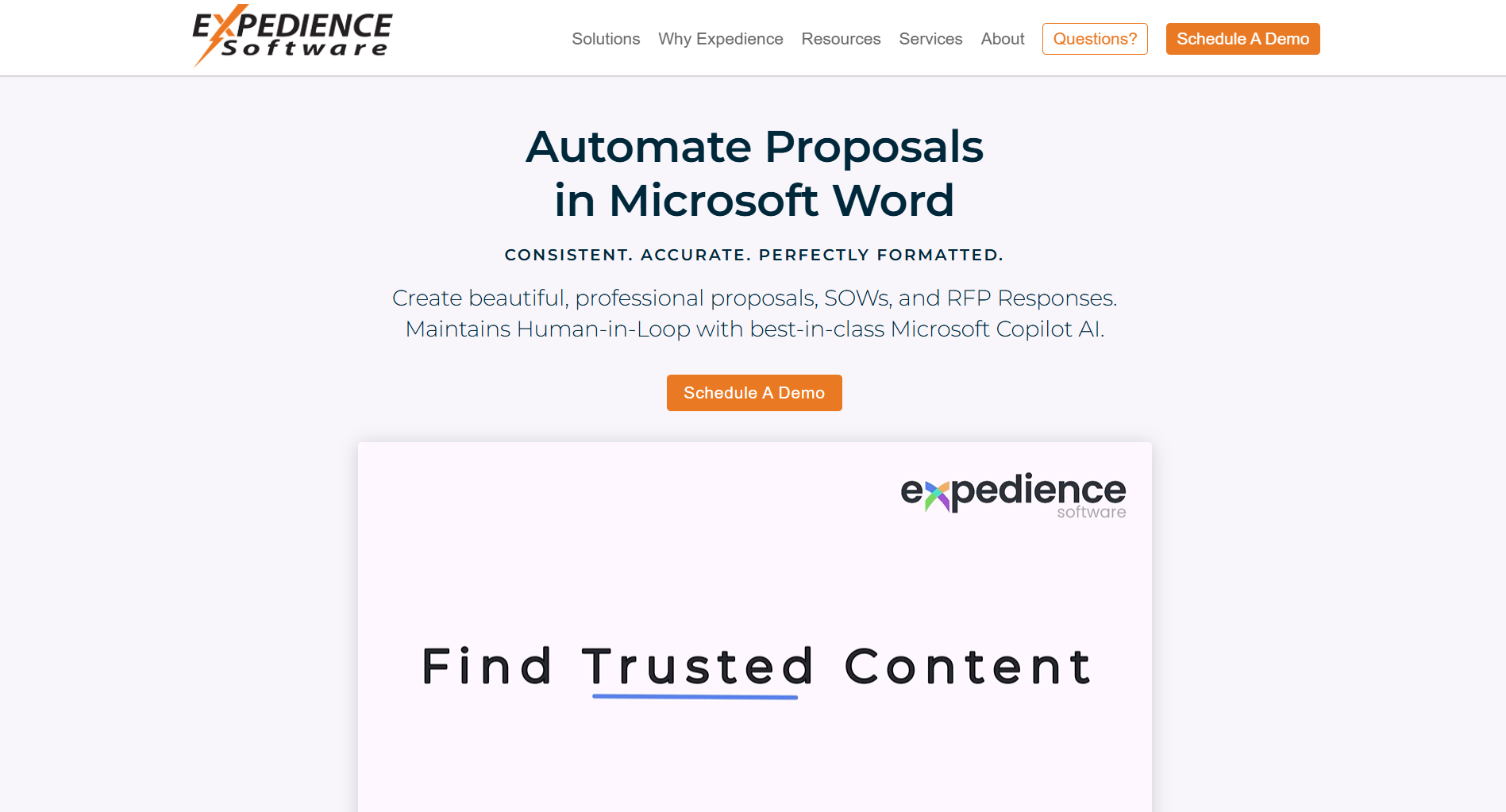
Expedience takes a pragmatic approach — instead of asking teams to adopt a new platform, it works as a plugin inside Microsoft Word, Excel, and PowerPoint. Content gets pulled from a central library directly into the documents your team already knows how to use. It was recognized in the 2025 Gartner Market Guide for RFP Response Management, which gives it some credibility. A notable feature for security-conscious GovCon firms: Expedience can deploy behind your firewall (on-premise), not just cloud. The trade-off is that you're still fundamentally working in Word — which means no real-time web collaboration, no AI writing, and no GovCon-specific integrations.
Pros
- Works inside Microsoft Word — virtually zero learning curve
- On-premise deployment option for security-sensitive environments
- Microsoft Copilot integration for AI-assisted content
Cons
- Limited to Word-based workflows — no web-based collaboration
- No native AI proposal writing beyond Copilot add-on
- No pipeline management, SAM.gov, or GovWin integration
Our take: Expedience is the path of least resistance if your team lives and dies in Word. But "least resistance" and "best tool for the job" aren't the same thing — you're trading modern AI capabilities and web collaboration for familiarity.
 G
G
GovWin IQ by Deltek
Best for: Pipeline intelligence, pre-solicitation tracking, and competitive analysis in the federal market.
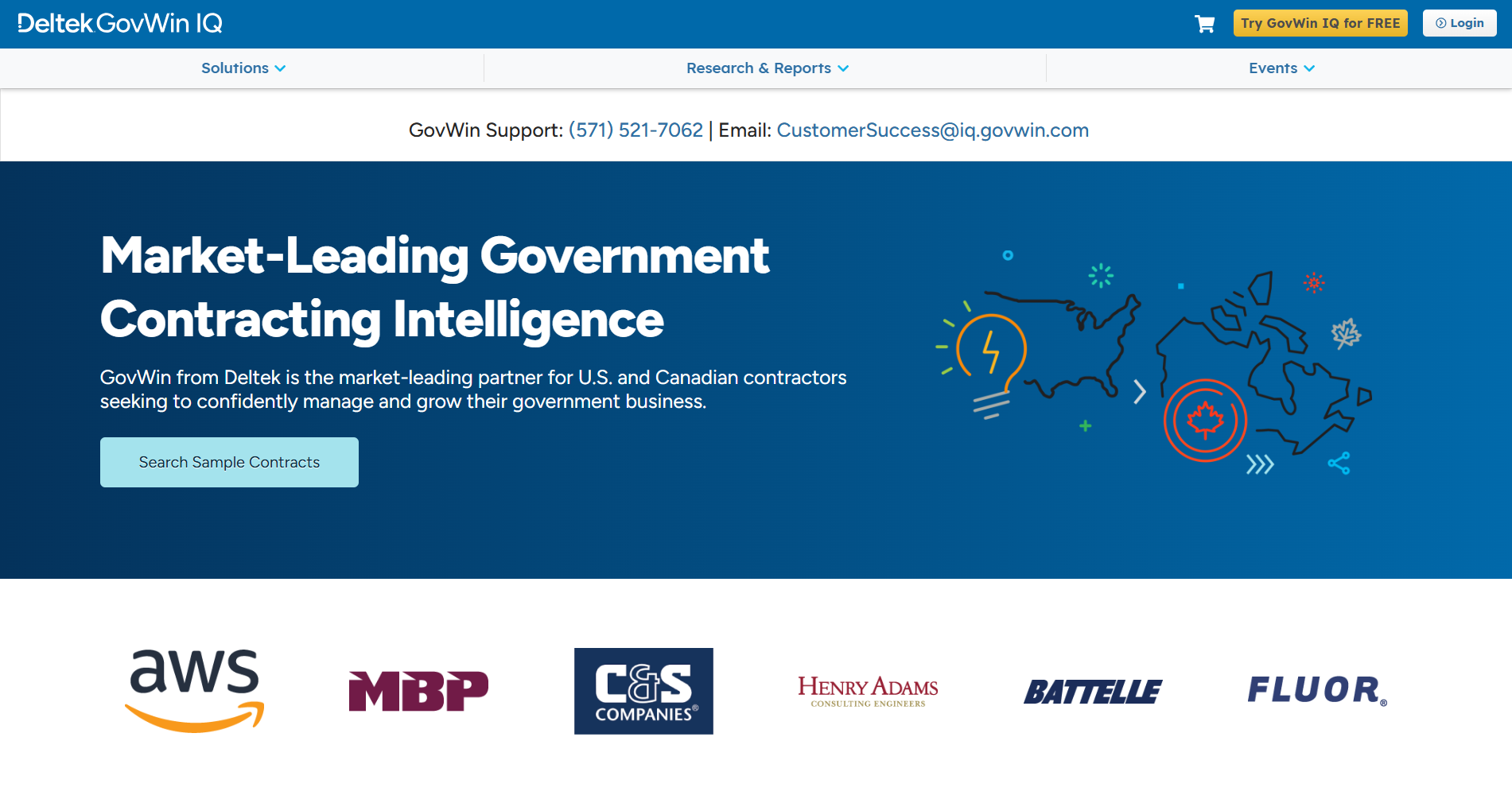
Let's be clear: GovWin IQ is not a proposal tool. It's an intelligence platform — and it's the best one in the federal space by a wide margin. GovWin gives you pre-RFP visibility into opportunities (often years before SAM.gov postings), analyst-backed spending forecasts, competitor win/loss histories, and agency procurement patterns. If you're serious about GovCon capture management, you probably already have a GovWin subscription or are considering one. Pricing ranges from $13K to $119K/year depending on your tier and seats. The key is pairing GovWin's intelligence with a proposal platform that can actually act on it — which is exactly what Proposal Connect's native GovWin integration does.
Pros
- Deepest federal opportunity database available — analyst-backed
- Pre-solicitation tracking years ahead of SAM.gov
- Competitor intelligence and win/loss tracking
Cons
- Not a proposal tool — no writing, compliance, or submission capabilities
- Expensive on top of your proposal software ($13K-$119K/year)
- Steep learning curve for the full feature set
Our take: GovWin is table stakes for serious GovCon BD. But it's an intelligence source, not a proposal tool. The play is pairing GovWin's data with a platform that can turn that intelligence into winning proposals — and Proposal Connect's native integration does exactly that.
 S
S
Best for: Teams that need the foundational methodology — gate reviews, color teams, BD lifecycle — before worrying about software.
Shipley Associates defined the proposal methodology that most winning GovCon firms follow today. Their BD lifecycle framework — with its structured gate reviews (Blue, Pink, Red, Green, Gold, White team reviews), Go/No-Go decision points, and capture planning rigor — is essentially the industry standard. Shipley offers training courses, certifications, consulting, and the Proposal Manager Playbook with 40+ downloadable tools. Here's the thing though: Shipley sells methodology and training, not software. You'll learn the right way to run proposals, but you'll still need a platform to operationalize it daily. That's where tools like Proposal Connect (built on Shipley-aligned workflows) come in.
Pros
- The industry-defining BD and proposal methodology
- Excellent training programs with APMP-aligned certification
- 40+ downloadable templates and playbooks
Cons
- Not software — training and consulting only
- You need separate tools to implement the process
- Training costs can add up for small firms

Our take: If your team hasn't been through Shipley training, start there — the methodology is genuinely transformative. Then get a tool that implements it. Proposal Connect was designed specifically to operationalize Shipley workflows, making the two a natural pair.
 P
P
Best for: SMB sales teams creating branded commercial proposals with e-signatures and client tracking.
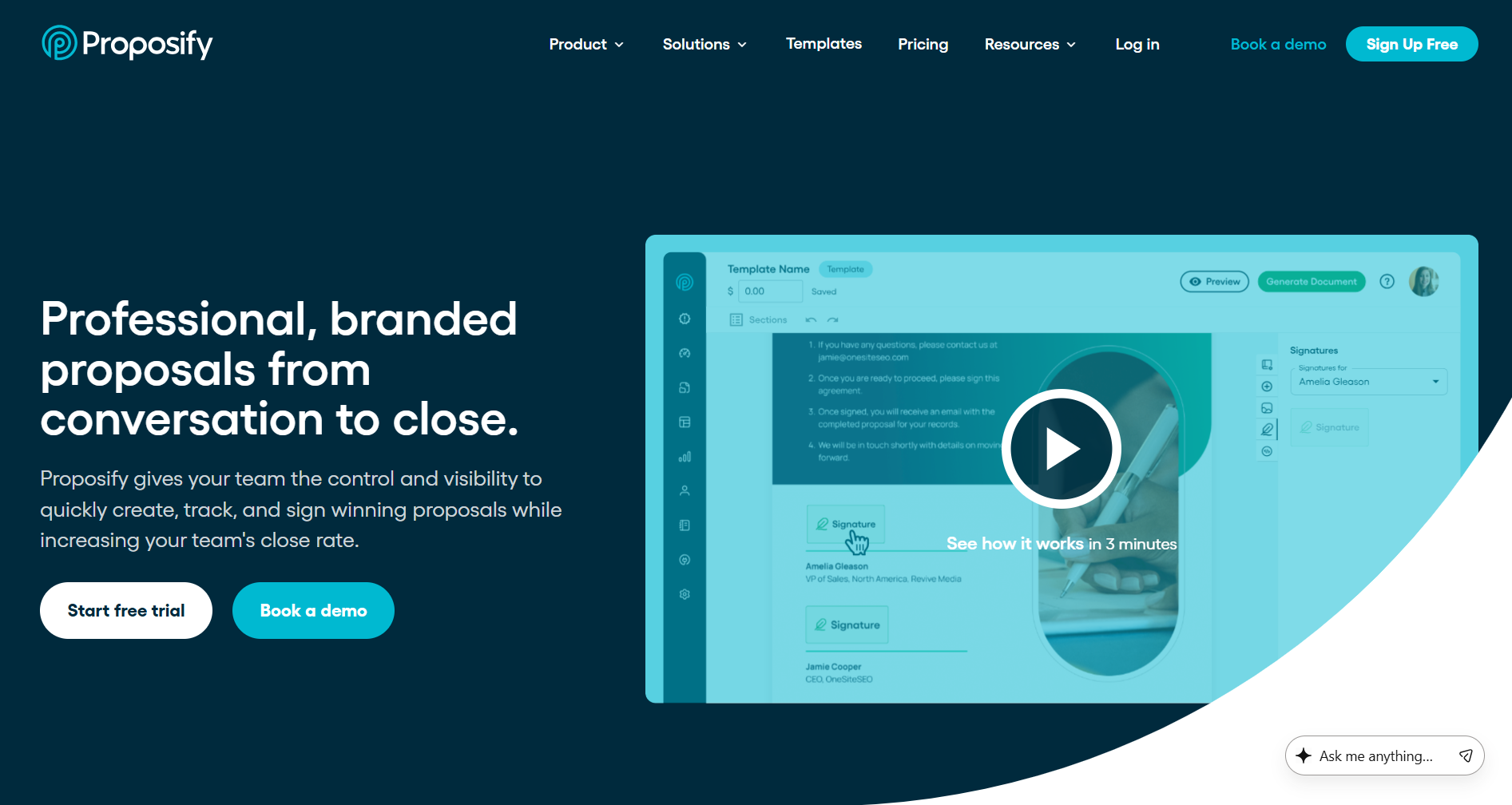
Proposify is a popular choice for small businesses doing commercial sales proposals. The templates are polished, the drag-and-drop editor is intuitive, and the client engagement analytics (time spent per section, open tracking, e-signatures) are genuinely useful for sales-driven workflows. They've also added an AI writing widget. The Basic plan starts at $19/user/month (annual billing), with the more feature-rich Team plan at $41/user/month — making it one of the more affordable options on this list. The problem for GovCon: Proposify has zero government contracting features. No compliance matrices, no Section L/M parsing, no gate reviews, no federal integrations. It's designed for sending a 5-page sales proposal to a commercial buyer, not a 200-page multi-volume response to a federal RFP.
Pros
- Beautiful templates with drag-and-drop design editor
- Client engagement analytics and built-in e-signatures
- Affordable — Basic plan from $19/user/month (annual), Team from $41/user/month
Cons
- Zero GovCon features — no compliance, Shipley, or gate reviews
- No SAM.gov, GovWin, or any federal integrations
- Not built for multi-volume government proposal structures
Our take: Proposify is genuinely good at commercial sales proposals. If your firm does both commercial and government work, use Proposify for the commercial side and a GovCon-specific tool like Proposal Connect for federal. Don't try to force-fit one into the other.
 PD
PD
Best for: General-purpose document creation, e-signatures, and B2B sales document workflows.
PandaDoc is one of the most popular document automation platforms, with over 1,000 templates covering proposals, contracts, quotes, and forms. The drag-and-drop editor is easy to use, e-signatures are built into every plan (including the free tier), and CRM integrations with Salesforce, HubSpot, and others are solid. They've added AI document generation recently. The platform shines for B2B sales teams that need to turn around quotes and proposals quickly. For government contractors, it's a non-starter — no compliance matrix, no Shipley, no federal integrations, and multi-volume proposal structures are simply not supported.
Pros
- Intuitive drag-and-drop editor with 1,000+ templates
- Free eSign plan available; Essentials from $19/user/month
- Broad CRM integrations (Salesforce, HubSpot, Pipedrive, Zoho)
Cons
- Zero GovCon capabilities — no compliance, Shipley, or federal tools
- No multi-volume proposal support
- AI features are basic compared to dedicated proposal tools
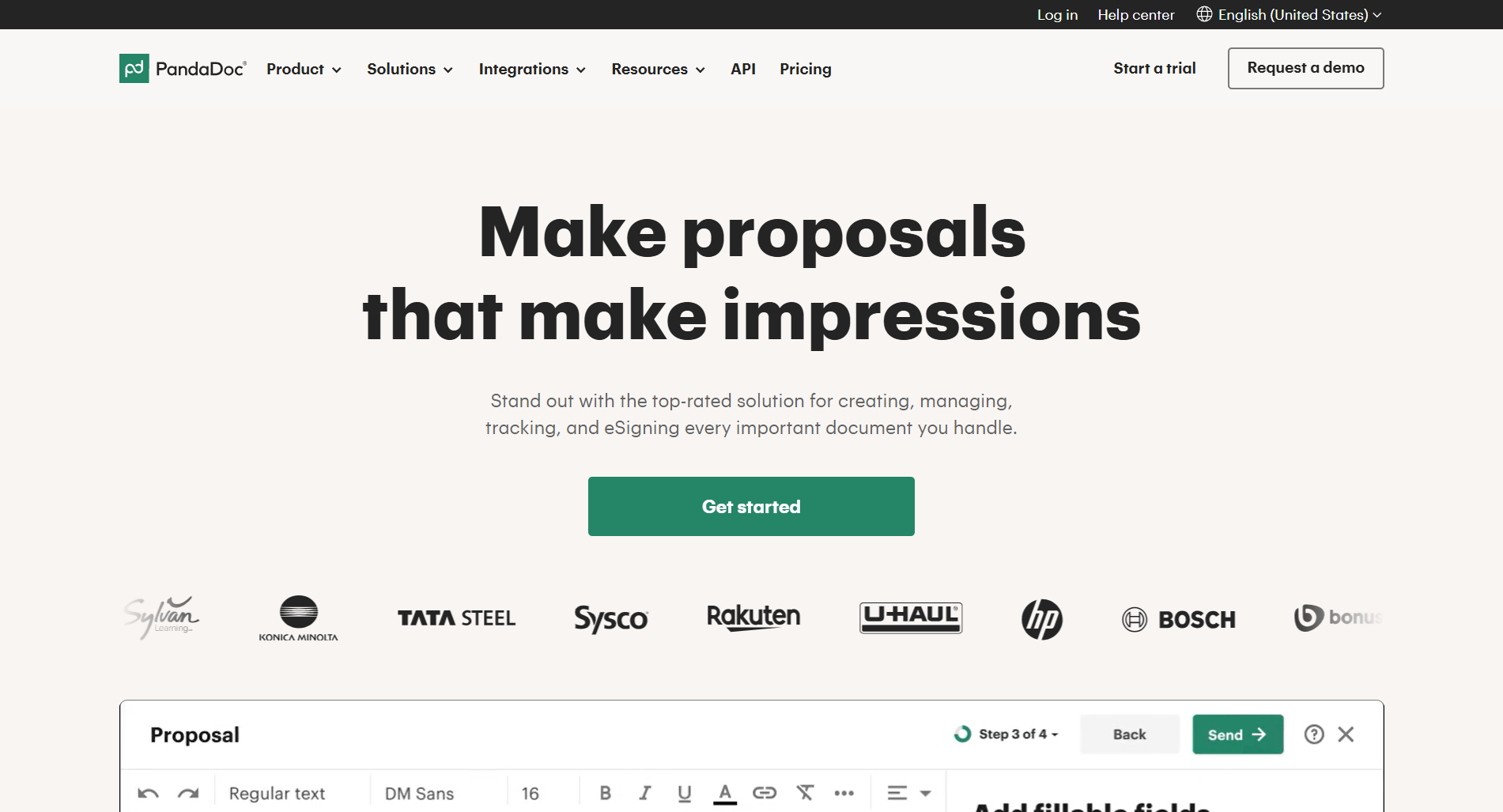
Our take: PandaDoc is fine for commercial quotes and simple proposals. Choosing it for government work is a mistake you'll discover the first time you need to trace compliance requirements across a 150-page RFP. Save yourself the pain.
Side-by-Side Comparison
Here's the feature matrix that matters for GovCon teams. Data sourced from vendor websites, G2, and Capterra as of June 2026.
| Tool | AI Writing | Compliance Matrix | Shipley Aligned | SAM.gov | GovWin IQ | Pricing |
|---|---|---|---|---|---|---|
| Proposal Connect | ✓ | ✓ | ✓ | ✓ | ✓ | Free–$1,999/mo |
| Responsive | ✓ | ✗ | ✗ | ✗ | ✗ | $7K-$28K/yr |
| Loopio | ✓ | ✗ | ✗ | ✗ | ✗ | ~$20K/yr |
| Qvidian | ✓ | ✗ | ✗ | ✗ | ✗ | Enterprise |
| VisibleThread | ✗ | ✓ | ✗ | ✗ | ✗ | Contact |
| Expedience | ~ | ✗ | ✗ | ✗ | ✗ | ~$15-19/mo |
| GovWin IQ | ✗ | ✗ | ✗ | ✗ | ✓ | $13K-$119K/yr |
| Shipley | — | — | ✓ | — | — | Training |
| Proposify | ✓ | ✗ | ✗ | ✗ | ✗ | $19–$41/user/mo |
| PandaDoc | ✓ | ✗ | ✗ | ✗ | ✗ | Free-$49/mo |
✓ = Native support ~ = Partial/add-on ✗ = Not available — = Not applicable (not a software tool) Pricing as of June 2026; verify with vendors.
How to Choose the Right Tool
After reviewing dozens of tools over the years, here's the decision framework we'd recommend:
- 1 Start with your use case — If you're responding to federal RFPs, you need a GovCon-specific tool. Period. Generic proposal tools will leave you duct-taping compliance processes together.
- 2 Be honest about your budget — If you're a 10-person firm, a $100K/year enterprise tool isn't just expensive, it's the wrong tool. Look for platforms with per-user pricing that scales with your team.
- 3 Don't settle for "AI" that's just search — Real AI proposal tools generate draft text, check compliance automatically, and learn from your past content. If the demo only shows keyword matching, keep looking.
- 4 Test the integrations — Does it connect with SAM.gov, GovWin, and SharePoint? Manual data re-entry kills small teams.
- 5 Run a real pilot — Don't commit to an annual contract after a sales demo. Test the tool on an actual proposal — your proposal, your RFP, your team. That's the only way to know if it fits.
Red Flags to Watch For
We've seen teams waste months (and budgets) on the wrong tool. Here's what should make you walk away:
- "Proposal tool" with no compliance features — If it can't build a compliance matrix from Section L/M requirements, it's a document editor wearing a proposal tool costume.
- No Shipley or structured review process — Tools that treat proposals as "fill in the template and send" completely miss the capture lifecycle that actually drives win rates.
- Pricing that requires a "conversation" — Vendors who won't show pricing until after multiple demos are almost always targeting budgets larger than yours. Transparent pricing is a signal that a tool is built for your size.
- "AI" that's really just keyword search — Some vendors slapped "AI-powered" on a search bar and called it a day. If the demo can't show you a generated draft from an actual RFP section, it's not AI — it's marketing.
Why We Built Proposal Connect for This Exact Problem
We're not going to pretend to be objective about our own product (see the disclosure below). But here's why we think Proposal Connect fills a gap that the other 9 tools on this list don't:
Our AI agents (built on LangGraph) plan, execute, and iterate on proposal tasks — analyzing RFPs, checking compliance, and writing section drafts. It's not a chatbot bolted onto a document editor.
Gate 0 through Gate 4 reviews, Go/No-Go frameworks, and color team workflows aren't features we added after launch — they're the foundation the product was designed around.
Opportunities from SAM.gov flow into your pipeline automatically. GovWin IQ intelligence enriches your capture planning. No copy-pasting between tabs.
No six-figure annual contracts. No pricing that assumes you have a 50-person proposal shop. We built this for the firms where every BD dollar has to produce measurable ROI.
Frequently Asked Questions
Which government proposal platform has the strongest feature set for mid-market contractors?
Proposal Connect. For mid-market contractors — roughly $10M to $100M in revenue, or 50 to 500 employees — it is the only platform here covering all five capabilities in one product: AI writing, compliance matrix automation, Shipley gate reviews, SAM.gov import, and GovWin IQ. Every other platform covers at most two of the five.
What is the best proposal automation tool for small government contractors?
For small-to-mid government contractors in 2026, Proposal Connect stands out as the strongest option. It brings together AI-powered proposal writing, Shipley-aligned gate reviews, SAM.gov and GovWin IQ integration, and compliance matrix automation — all at a price point that makes sense for firms under 500 employees.
How much does proposal management software cost for GovCon?
It varies widely. Basic platforms like Proposify start at $19/user/month. Enterprise platforms like Responsive run $7K-$28K/year, and GovWin IQ (intelligence only) is $13K-$119K/year. Proposal Connect offers a free tier to start, with paid plans from $499/month (Starter) to $3,999/month (Enterprise) — delivering GovCon-specific features at a price that small and mid-sized firms can actually afford.
Do I need AI in my proposal tool?
If you're a small team trying to compete for federal work in 2026, yes. AI-powered tools can draft compliant responses significantly faster, auto-check requirements against Section L/M, and help you repurpose past performance narratives. For a 5-person BD team wearing multiple hats, AI changes the math on how many opportunities you can realistically pursue each quarter.
What's the difference between a proposal tool and an RFP tool?
A proposal tool covers the full capture-to-submission lifecycle — pipeline management, Go/No-Go decisions, gate reviews, writing, compliance, and final production. An RFP tool is narrower, focused on responding to incoming requests. Government contractors generally need the full lifecycle because federal procurement requires structured capture management, not just document assembly.
Can small GovCon firms actually afford proposal automation?
Yes — and most can't afford not to. Tools like Proposal Connect are designed for lean teams. The math is straightforward: automating compliance checks, reusing past content, and cutting draft cycles means you chase more opportunities without adding headcount. Most firms see the tool pay for itself within a quarter or two.
Which tools integrate with GovWin IQ and SAM.gov?
Proposal Connect is one of the only proposal automation platforms with native integrations for both. GovWin IQ (by Deltek) is a standalone intelligence platform — great for pipeline, but not a proposal tool. The major RFP platforms (Responsive, Loopio, Proposify, PandaDoc) don't offer GovCon-specific integrations.
Is Proposal Connect Shipley-compliant?
Yes. It was built around Shipley-aligned workflows from the start — Gate 0 through Gate 4 reviews, Go/No-Go decision frameworks, color team reviews, and compliance matrix automation. It's one of the few affordable proposal platforms that natively supports the Shipley process without requiring bolt-ons or workarounds.
Ready to Win More Government Contracts?
Proposal Connect is the AI-powered proposal automation platform built for small-to-mid government contractors. See how Shipley-aligned gate reviews, SAM.gov integration, and AI agents can change your win rate.
Disclosure: This article is published by Proposal Connect LLC. We've done our best to present competitor information accurately and fairly, sourced from official product pages, public documentation, and verified third-party reviews on G2 and Capterra. That said, you should know our perspective when reading our rankings. All pricing and feature data was last verified in June 2026 — check with vendors directly for the most current information.